
Ellis County Arrest Records and Court Charges
Ellis County arrest records start on the law-enforcement side. They may reflect that a person was taken into custody, booked into the Ellis County Jail, or listed on the public jail log after booking. That log is an Alpha Prisoner Listing Summary from the Ellis County Sheriff's Office. It is useful for custody facts, but it is not the same as a criminal court file. The jail log may show a name, booking number, booking date, date of birth, sex, race, inmate number, and housing. It does not replace the charge record filed in court.
Court charges after arrest begin when the Ellis County Attorney or another proper prosecutor files a charging document with the District Court. The charge record is narrower than a full criminal case file. It focuses on the offense wording, statute or ordinance reference, severity level, filing agency, prosecutor, bond, first appearance, and later charge status. The full case file, with pleas, motions, disposition, sentencing, costs, restitution, and supervision orders, belongs with Ellis County criminal court records.
The Ellis County Attorney's Office is the local prosecutor named in official county sources. The office prosecutes misdemeanor and felony cases and also handles Ellis County and Kansas Highway Patrol traffic violations, juvenile offender matters, care and treatment cases, child in need of care cases, and mental-illness matters. Official staff listings name Aaron J. Cunningham as Ellis County Attorney, with assistant county attorneys Brenda L. Basgall and Joshua N. Becker. For charge records, that office is the filing and prosecution point, while the Clerk of the District Court maintains the court file.
The official Ellis County Attorney page is captured in the image source from the county attorney office page.
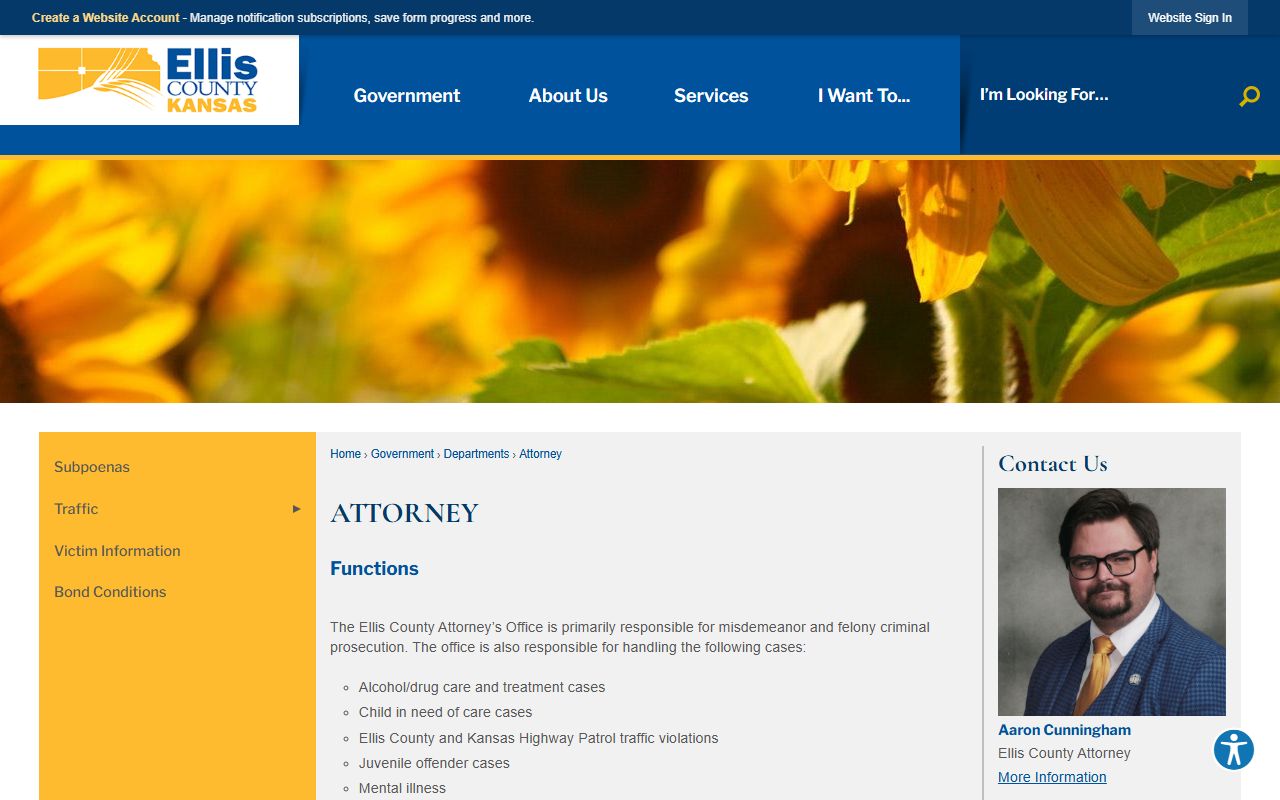
That office context matters because a booking event alone does not decide which Ellis County court charges will be filed, amended, reduced, or dismissed.
Search Ellis County Arrest Records and Charges
There is no single Ellis County mugshot or booking database in the research sources that also gives the formal court charge record. The public path has two tracks. For filed District Court charges, start with Kansas CaseSearch, because Ellis County District Court is part of the statewide Kansas district court public search system. For custody status or booking facts, use the Ellis County jail log linked from the 23rd Judicial District court dockets page, then confirm court charges through CaseSearch or the Clerk of the District Court.
- Search Kansas CaseSearch by case number if known, or by the defendant's name if no case number is known.
- Limit the review to Ellis County District Court matters when the result set includes more than one county or case type.
- Open the case information and read the charge wording, case events, bond entries, hearing dates, disposition entries, and financial obligations if visible.
- If the case is public but not online, contact the Clerk of the District Court for copy access, certified copies, older files, or courthouse terminal options.
- Use the jail log only for jail custody facts, not for a final statement of all charges or case outcomes.
The search flow is split because a person can be arrested before a final charging decision is made. A prosecutor may file fewer charges than the arrest report suggested, file a different offense, decline a charge, or later amend the charge. Kansas public access rules also mean that some data may be public at the courthouse but not visible online. Juvenile, sealed, expunged, adoption, mental-health, and certain confidential identifiers may be withheld or redacted.
The Kansas Board of Indigents' Defense Services source appears in the image from the BIDS official site.

BIDS is relevant when a defendant has been charged and asks the District Court judge to appoint counsel in an eligible adult felony case.
Ellis County Charge Record Documents
The charge record begins with a document that tells the court what offense is alleged. Research for Ellis County identifies complaint and information as common criminal case contents. Indictment is included here because it is a recognized charging-document type, but the local research did not identify an Ellis County grand-jury process or sample indictment. The practical point is that the charge document is a court filing, while the arrest record is a booking or law-enforcement record.
| Document | Filed By | What It Does | Ellis County Use |
|---|---|---|---|
| Complaint | Prosecutor or authorized complainant | States the offense alleged and begins or supports a criminal case. | Listed in research as a typical criminal court record item. |
| Information | Prosecutor | Formally charges an offense after prosecutorial review. | Listed in research as a typical District Court criminal filing. |
| Indictment | Grand jury | Charges an offense after grand-jury action. | Not confirmed in local samples, so do not assume it appears in a given Ellis case. |
The charge document can carry the offense name, statute, severity, and count number. One arrest can lead to more than one count. A single court case can include a misdemeanor count, a felony count, bond conditions, arraignment entries, hearing notices, and later dismissal or plea entries. The District Court record is the better source for those facts than a jail listing.
Ellis County Charge Record Status
Charge status is not static. Court charges after arrest can be pending at first appearance, amended after review, reduced through plea negotiation, dismissed by court order, or resolved through conviction, diversion, acquittal, or another disposition. The County Attorney's role is central because that office files and prosecutes the case, but the judge controls court orders, bond decisions, and final entries.
| Status | Plain Meaning | Where to Check |
|---|---|---|
| Pending | The charge has been filed and no final disposition appears yet. | CaseSearch, the court docket, or the Clerk of the District Court. |
| Amended | The filed charge wording, count, statute, or level changed after filing. | Look for amended complaint, amended information, or later docket entries. |
| Reduced | The case moved to a lesser offense or lower level, often through negotiation. | Compare original and later charge or plea entries. |
| Dismissed | The court record shows a charge was ended without conviction on that count. | Review the disposition or journal entry. |
| Diversion | An agreement may resolve the case if conditions are completed. | Check docket entries and prosecutor or court notices. |
The Ellis County Attorney directory source is shown in the image captured from the county attorney staff directory.
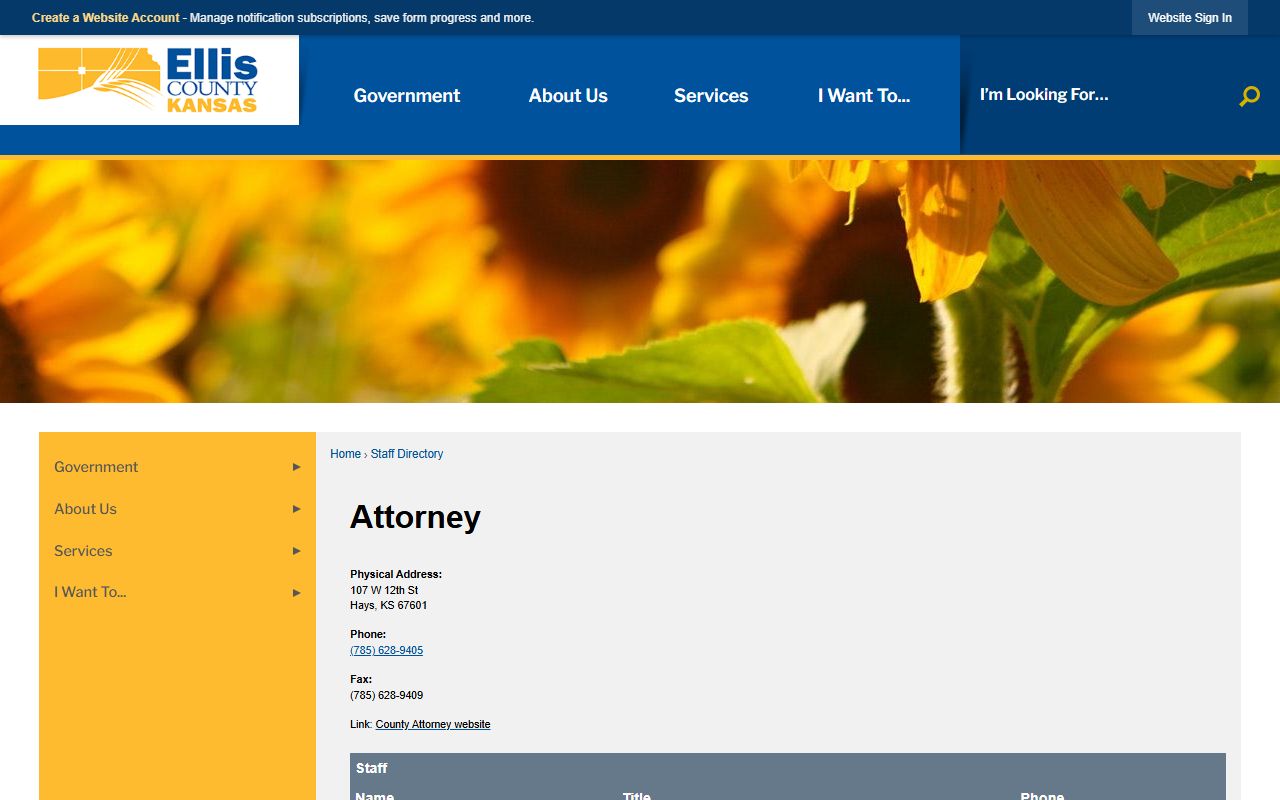
Staff directory details support the local prosecutor context, but the filed court record remains the source for charge status in a specific case.
Ellis County Charges and Convictions
A charge is an accusation filed with the court. A conviction is an outcome after a guilty plea, no-contest plea accepted by the court, or guilty verdict. Ellis County arrest records can exist even when no conviction follows. A jail log can show that a person was booked, while a District Court case can show whether the prosecutor filed charges and how those charges ended.
| Point | Charge | Conviction |
|---|---|---|
| Stage | Filed after arrest or citation review. | Entered after plea, verdict, or court judgment. |
| Meaning | An allegation that must still be resolved. | A formal finding or accepted plea. |
| Record Source | Complaint, information, docket entries, bond orders. | Disposition, journal entry, sentencing record. |
| Risk of Misread | May be amended, reduced, dismissed, or diverted. | May still be subject to appeal, expungement, or later correction. |
This difference is why Ellis County court charge records should not be read as proof of guilt. For a background or legal use, the final disposition and sentencing entry matter more than the first charge list.
Ellis County Jail Log and Charges
The official jail log is a custody source. It may help identify whether a person has been booked into the Ellis County Jail, but it does not show every item a reader may expect from an arrest database. Research found no mugshot, height, weight, eye color, hair color, charge text, statute, arresting agency, bond amount, magistrate, warrant number, court date, release date, or medical flag in the jail-log sample. Those limits should shape any arrest-record search.
The Ellis County Sheriff's Office maintains the jail facility next to the courthouse. That physical link matters because inmates may be moved between jail and District Court hearings in the same courthouse area, but the sheriff and clerk maintain different records. For booking and custody details, use the jail log and jail contact channels. For court charges, use District Court case access. For a custody-focused lookup, use the Ellis County inmate records page.
Hays Municipal Charges
Not every charge after arrest is a District Court case. Hays Municipal Court handles City of Hays ordinance violations, including municipal traffic, criminal, and code matters. Official Hays material says Hays Police Department tickets go to Hays Municipal Court. Kansas Highway Patrol and Ellis County Sheriff's Office tickets go to Ellis County District Court. That split matters when the record sought is a municipal citation, a city ordinance violation, or a failure-to-appear event from municipal court.
Hays provides a municipal court document request form. The form asks for the date of request, full name at the time of incident, current address, phone number, email address, date of birth, approximate date of charges, charge description, reason for request, return method, certified-copy choice, and electronic signature. It is a request form, not a public search database. Incomplete forms may not be processed, and official Hays records may require payment before release.
Note: Hays Municipal Court first appearances and District Court appearances use different offices, so confirm the court named on the notice or citation.
Restricted Ellis County Charge Records
Kansas public access rules are open-records oriented, but not all Ellis County arrest records or charge records are public online. K.S.A. 45-216 states the general public policy favoring open public records. K.S.A. 45-218 covers inspection requests, responses, refusals, and fee handling. K.S.A. 45-221 lists records agencies are not required to disclose. Court access is also governed by Kansas Supreme Court rules, including electronic case-record rules.
| Record Limit | Effect on Public Access | Research Anchor |
|---|---|---|
| Juvenile records | Youth matters are not treated like ordinary adult criminal files. | K.S.A. 38-2312 is the juvenile expungement anchor. |
| Sealed records | Cases or documents may be hidden from public access unless a court order allows release. | KORA and court rules allow limits. |
| Expunged records | Eligible events can be sealed from public view after court approval. | K.S.A. 21-6614 and K.S.A. 22-2410. |
| Redacted data | Private identifiers may be removed from otherwise public records. | KORA and Kansas court access rules. |
Sealed and expunged records are related, but they are not identical. Both can affect whether an Ellis County charge record appears in a public search, and both require attention to the court order or statute involved.
| Point | Sealed Record | Expunged Record |
|---|---|---|
| Public view | Hidden from general public access by law or court order. | Sealed from public view after a successful expungement petition. |
| Record status | The case or document still exists, but access is restricted. | The event is treated as expunged for many public purposes, but not erased for all agencies. |
| Kansas anchor | KORA and court rules can restrict access. | K.S.A. 21-6614 and K.S.A. 22-2410 are key adult expungement anchors. |
The juvenile expungement statute appears in the image source from K.S.A. 38-2312.
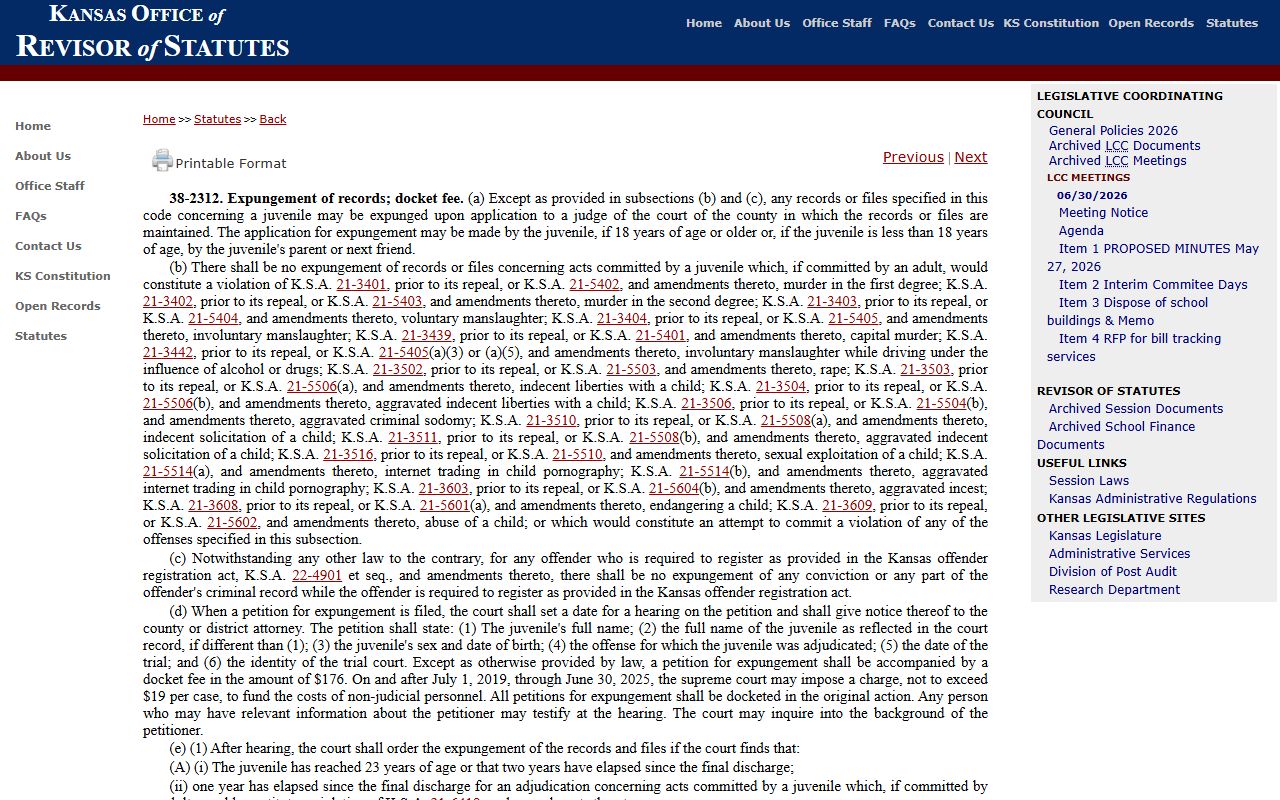
Juvenile and expungement rules are important because an arrest or charge may exist in government systems while no longer being available to the general public.
Defense Counsel After Charges
After court charges are filed, a defendant who cannot afford a lawyer may ask about appointed counsel. Kansas uses the Kansas State Board of Indigents' Defense Services client resources system. BIDS explains that public defenders or assigned counsel can only be appointed by a district court judge in eligible adult felony cases. A defendant completes financial affidavit paperwork in the district court where charged.
The BIDS client-resource image comes from the official BIDS client resources page.

That appointed-counsel process is tied to the filed case, not merely to the fact that an arrest occurred.
BIDS also publishes statewide contact information. The image source from BIDS contact information supports the statewide public-defense channel.

No Ellis County-specific public defender office was found in official local sources, so the District Court appointment process is the supported local path.